


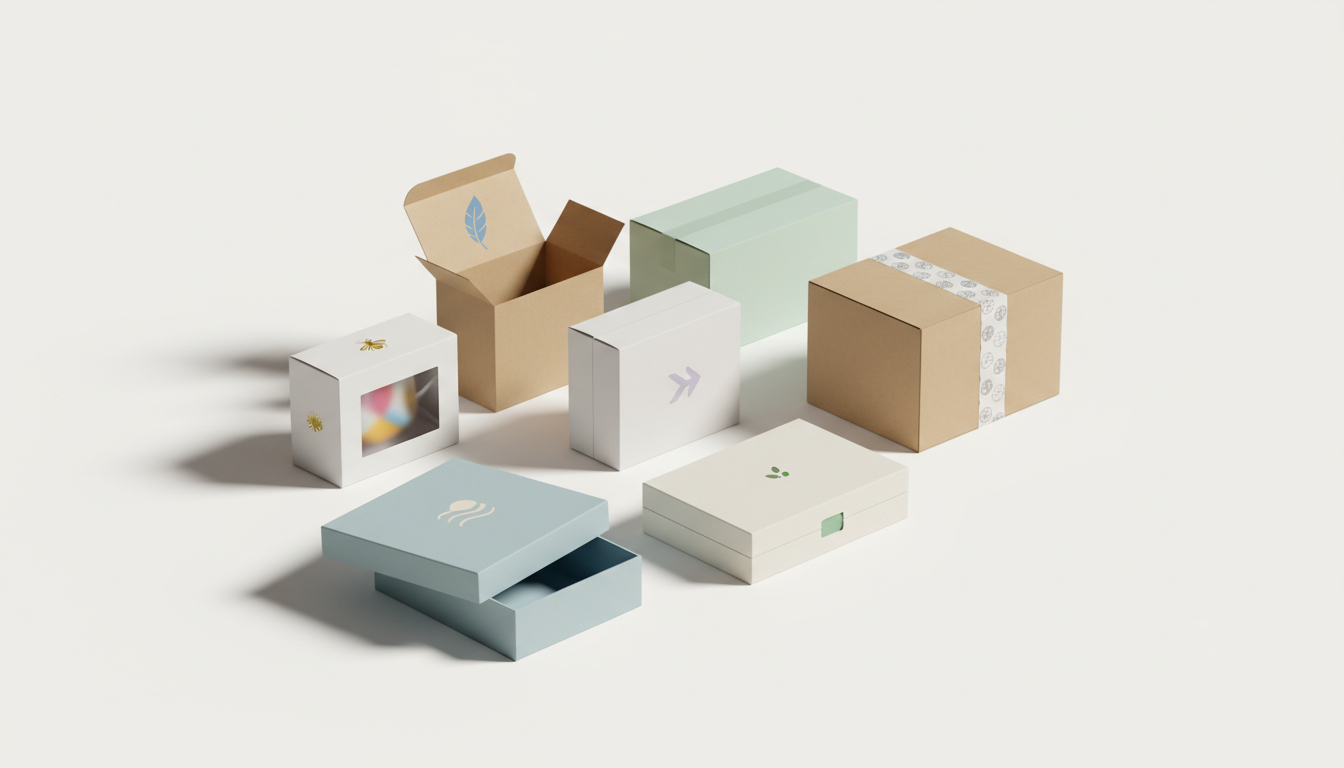
The best custom box depends on your product’s fragility, weight, sales channel, and the experience you want customers to have. Use folding cartons for lightweight retail items, corrugated boxes for shipping protection, and rigid boxes for premium presentation. Then choose a style (mailer, tuck end, RSC, drawer) to match fulfilment and budget.
Choosing the right packaging should feel simpler than it usually does. In the UK, a smart box choice protects your product, reduces postage waste, improves unboxing, and helps you stay consistent with packaging data and compliance expectations under UK EPR guidance.
Quick answer: How to choose the right custom box
Before you pick a box style, answer these five questions:
-
Where will the product be used? Retail shelf, ecommerce delivery, subscription, or wholesale cartons.
-
How fragile is it? Glass, cosmetics, electronics, candles, or food need different protection levels.
-
How heavy is it? Heavier products need stronger bases, better fluting, or rigid board support.
-
What experience are you selling? Practical delivery, giftable premium, or high-impact branding.
-
What UK constraints apply? Royal Mail size bands, storage space, and repeatable specs for reporting.
If you only remember one rule: start with the “box family” (rigid, folding carton, corrugated), then choose a “style” (mailer, tuck end, RSC, drawer, magnetic) based on the job.
The 3 core box families (what they are, and when to use them)
Rigid boxes (set-up boxes): when presentation matters most
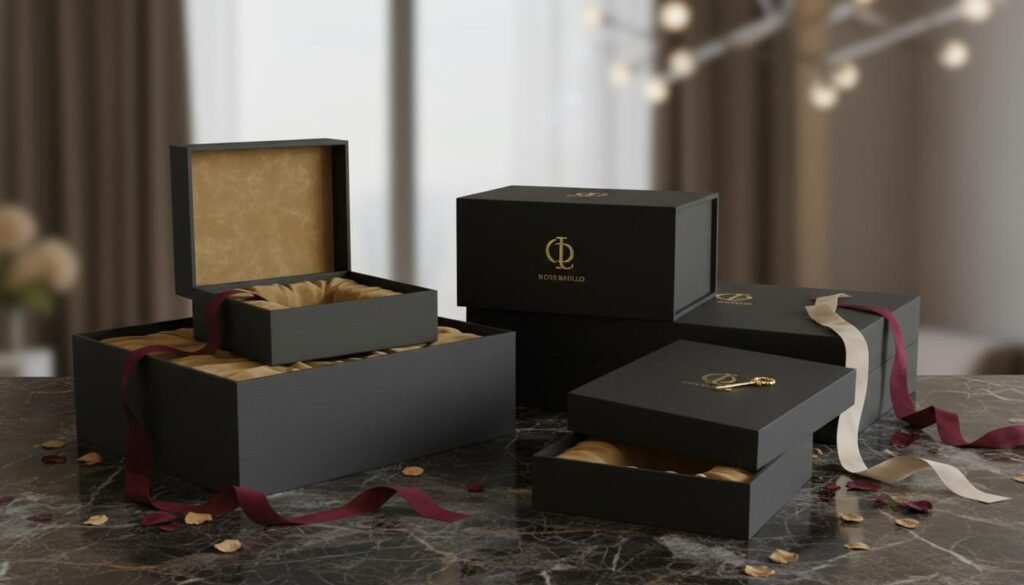
Rigid boxes are thick, non-collapsible boxes often used for premium products. Many guides call them “set-up” boxes and position them as the luxury option.
Use rigid boxes when:
-
You sell high-value products (jewellery, fragrances, premium electronics).
-
You want a giftable unboxing experience.
-
The product is heavy and needs strong walls and a strong base.
Common rigid styles you’ll see:
-
Magnetic closure boxes for premium gifting and clean presentation.
-
Two-piece lid and base boxes for classic luxury packaging.
-
Drawer/slide boxes for “reveal” unboxing and accessories.
When not to use rigid boxes:
-
If you need low postage costs or flat shipping and storage, rigid boxes take up space.
-
If your product is low-margin and you need cost-effective scaling.
You can purchase custom rigid boxes at wholesale prices from us.
Folding cartons (paperboard): the retail workhorse
Folding cartons (also called paperboard cartons) are lightweight and ship flat. They are a go-to for branded retail packaging because they print well and are efficient to store.
Use folding cartons when:
-
You sell light to medium-weight items like cosmetics, supplements, small food products, and consumer goods.
-
You need strong branding on a budget (full coverage print, finishes, windows).
-
Your supply chain benefits from flat-packed storage.
Popular folding carton closures:
-
Straight tuck end (STE) for clean front panels and a premium shelf feel.
-
Reverse tuck end (RTE) for efficient material use.
-
Auto-lock bottom when the product is heavier, or you need speed in packing.
-
Snap-lock bottom for medium-weight products like candles and jars.
When not to use folding cartons:
-
If the product needs serious impact resistance in transit without an outer shipper.
-
If moisture is a major risk, you may need coatings, liners, or an outer corrugated shipper.
Corrugated boxes (corrugated fibreboard): built for shipping protection
Corrugated boxes are the standard for shipping because the fluted layer absorbs shock and improves strength. Many competitors highlight single-wall, double-wall, and triple-wall options depending on the level of protection.
Use corrugated when:
-
You ship through couriers and want strong transit protection.
-
You run subscription or ecommerce deliveries where boxes face repeated handling.
-
You need stronger stacking and compression resistance for warehousing.
Corrugated strength options (in plain English):
-
Single wall: everyday shipping for most products.
-
Double wall: heavier items, longer routes, export, and better stacking.
-
Triple wall: industrial shipping and very heavy items.
When not to use corrugated:
-
If the product is primarily a retail shelf item, and you want a sleek look without the “shipper” feel (unless you use printed corrugated retail-ready designs).
Box styles you’ll actually order (and the best time to use each)
Mailer boxes: best for ecommerce and subscriptions
Mailer boxes are popular because they are self-locking and give a neat unboxing experience without extra tape.
Use mailers when:
-
You ship direct to consumers and want a branded, tidy box.
-
Your product is small-to-medium and can be protected with inserts and dividers.
Pro tip: Add inserts (cardboard or foam) to prevent movement, reduce damage, and make the unboxing feel intentional.
Regular Slotted Container (RSC): the universal shipping carton (FEFCO 0201)
If you have ever ordered a standard shipping carton, you have likely bought an RSC. In quoting, many suppliers refer to this as FEFCO 0201.
Use RSC (FEFCO 0201) when:
-
You need the most cost-effective, scalable corrugated shipper.
-
You are shipping in bulk to retailers, warehouses, or fulfilment centres.
Avoid RSC when:
-
You want a premium consumer unboxing without any inner packaging. Pair it with a folding carton or rigid inner box if presentation matters.
Window boxes (die-cut windows): best for “let them see it” retail
Window cut-outs boost shelf confidence, especially for cosmetics, confectionery, and gift items.
Use window boxes when:
-
Your product benefits from visual inspection (colour, texture, bundle contents).
-
You want retail impact without opening the box.
Drawer/slide boxes: premium feel without overcomplication
Drawer boxes are popular for jewellery, accessories, sets, and PR kits because they create a “reveal”.
Use drawer boxes when:
-
You sell sets and want a clear organisation inside.
-
You want reusability (customers keep them).
Magnetic closure boxes: luxury gifting and high perceived value
Magnetic rigid boxes are one of the clearest “premium signals” in packaging.
Use magnetic closure when:
-
Your pricing supports premium packaging.
-
You want a gifting, PR, or influencer-ready presentation.
Tuck end cartons (STE/RTE): the everyday branded product box
Tuck end styles are everywhere because they are cost-effective, print-friendly, and easy to assemble.
Use tuck-end cartons when:
-
You need a retail-ready product box for cosmetics, supplements, and small consumer goods.
-
You want consistent packaging that is easy to scale.
Telescope boxes: great for taller items and premium two-piece protection
Telescope boxes (lid + base that slide over) can add structure and protection without going fully rigid. They also suit products with variable height.
A practical selection checklist (actionable takeaways)
1) Match the box to the channel
-
Retail shelf: folding cartons, window boxes, display-ready structures.
-
Ecommerce delivery: corrugated mailers or RSC shippers + inserts.
-
Luxury gifting / PR: rigid boxes, magnetic closure, drawer boxes.
2) Reduce damage by controlling movement
Damage often comes from internal movement, not box failure. Use:
-
Cardboard inserts/dividers for multi-item sets
-
Foam inserts for fragile or premium items
3) Use sustainability as a design constraint, not a slogan
Customer interest in sustainable packaging keeps rising, and many brands see purchasing preference shifts tied to packaging choices. One 2025 consumer report summarises this trend clearly.
Practical moves that also help performance:
-
right-size packaging (less void fill)
-
paper-based inserts instead of mixed-material plastics, where feasible
-
consistent material specs for easier recycling communication
4) Keep specs consistent for UK compliance workflows
UK packaging EPR guidance emphasises what organisations must collect and report about packaging. Even if you are not personally compiling reports, consistent packaging specs make operations smoother as you scale.
UK-specific tips that competitors usually ignore
Royal Mail size bands can change your “best box.”
If you ship small items, hitting Royal Mail’s Large Letter limit can materially reduce postage compared to a parcel. Royal Mail publishes the Large Letter maximum size as 35.3 cm x 25 cm x 2.5 cm (with weight limits depending on service).
What this means in practice:
If your product can ship flat, consider a folding carton + protective mailer or a slim corrugated solution designed to stay under thickness limits.
Use standard language when you talk to suppliers
If you know “RSC” and “FEFCO 0201”, you can get faster, clearer quotes and fewer misunderstandings.
Frequently Asked Questions
Q1: What are the main types of custom boxes?
A: The three main families are folding cartons (paperboard), corrugated boxes (shipping strength), and rigid (set-up) boxes (premium presentation).
Q2: What is the difference between corrugated and cardboard?
A: Corrugated fibreboard includes a fluted inner layer that boosts strength and shock absorption, making it better for shipping than simple paperboard cartons.
Q3: When should I use a rigid box?
A: Use rigid boxes for luxury products, gifts, or fragile and heavy items where presentation and structure matter most.
Q4: Are mailer boxes good for e-commerce?
A: Yes. Mailer boxes are popular for e-commerce and subscription fulfilment because they are protective, easy to pack, and can be branded for unboxing.
Q5: What is FEFCO 0201?
A: FEFCO 0201 is the standard Regular Slotted Container (RSC), one of the most common corrugated shipping cartons used worldwide.